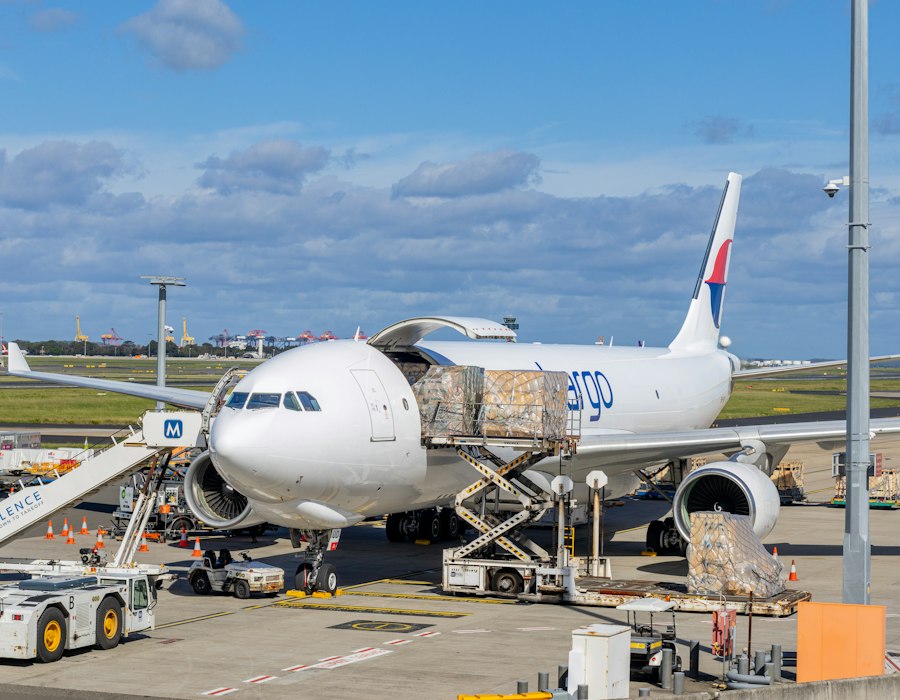
The textbook answer to “ocean or air?” is that air freight is roughly 4–6 times faster but can cost 5–15 times more per kilogram than ocean freight. That’s true, but it’s also not the whole story — and shippers who only look at cost-per-kilo often make the wrong call.
Start with total landed cost, not freight cost
Freight is only one line in the real cost of getting goods to market. A shipment sitting on the water for five weeks ties up working capital, requires more safety stock to cover the lead time, and carries a longer window of risk — theft, damage, delay, demand changes. For high-value or fast-moving goods, the “cheaper” ocean rate can end up costing more once you account for inventory carrying cost and the risk of stockouts.
When ocean freight is the right call
- Cargo is heavy or bulky relative to its value (furniture, raw materials, machinery)
- You can plan 3–6 weeks of lead time into your supply chain
- Order volumes are large enough to fill or nearly fill a container (FCL rates are far more efficient than LCL)
- The goods aren’t time-sensitive or perishable
When air freight earns its premium
- The cargo is high-value relative to its weight (electronics, pharmaceuticals, fashion)
- You’re launching a new product and can’t afford to miss the window
- A production delay means ocean transit would blow past a customer deadline
- The shipment is small enough that the absolute freight cost is manageable even at a higher rate
The middle ground: sea-air and expedited options
Few shippers realize there’s a spectrum between the two extremes. Sea-air combinations route cargo by ocean partway (commonly through a hub like Dubai) and finish the journey by air — cutting transit time significantly below pure ocean freight while staying well under pure air freight cost. Expedited LCL and consolidated air options can also close the gap for mid-size shipments that don’t neatly fit either mode.
A practical way to decide
Ask three questions: What does a week of delay actually cost me — in lost sales, expedite fees, or customer relationships? What’s my cargo’s value-to-weight ratio? And how much certainty do I need versus how much can I absorb if a shipment runs late? The answers usually point clearly to one mode — or to a hybrid approach that most shippers never consider until someone suggests it.
How Sealead helps
We quote ocean, air and hybrid routings side by side for the same shipment, so the mode decision is based on real numbers for your cargo — not a rule of thumb.